
To find all your subscriptions, combine payment statements, app-store subscription lists, and email receipts. No single screen necessarily covers services billed through Apple, Google Play, a website, and another household member's account. I build one list that connects each charge to its owner, renewal date, and cancellation route before deciding what to keep.
Holiday offers make this worth doing before adding another trial. A discount can be genuine and still leave you paying for a service that duplicates something you already have. The first win is knowing what you are already buying.
Start with the money trail
Review the payment methods your household actually uses: credit cards, bank accounts, and payment services. Include annual charges by looking beyond the latest statement. A service billed once a year can disappear from a review focused only on this month.
Search the statements for repeating amounts and merchant names, then open the transaction details. A billing descriptor may differ from the app's public name. Record the uncertainty rather than guessing and canceling a different service.
For how to find recurring charges, I use the payment trail to establish that a charge exists, then the service account or receipt to establish what it buys. Several similar charges can be separate plans, taxes, or different family members' accounts.
Do not upload unredacted financial statements to a random subscription-finder tool just to avoid a manual review. Begin with the account's own records. If you choose a connected tracker later, inspect the access and terms you are agreeing to.
Check Apple and Google billing separately
How to check subscriptions on iPhone
On iPhone, open Settings, tap your name, then Subscriptions. Review the subscriptions associated with that Apple Account. If a charge is missing, check the receipt and the account used for purchase.
An app installed on the phone can still bill you directly through its website. A family member may also own the subscription under a different account. The Apple subscription controls explain how receipts help identify the relevant billing route.
I copy the renewal date and plan name before changing anything. That preserves the information needed to compare options without repeatedly reopening the same screen.
How to check subscriptions on Android
In Google Play, use the profile menu, then Payments & subscriptions and Subscriptions. Confirm the Google account first, especially when the device has work and personal accounts.
A missing entry can mean another account or a different billing provider. Uninstalling the app does not cancel a Google Play subscription. Use the Google Play subscription controls to manage the actual recurring purchase.
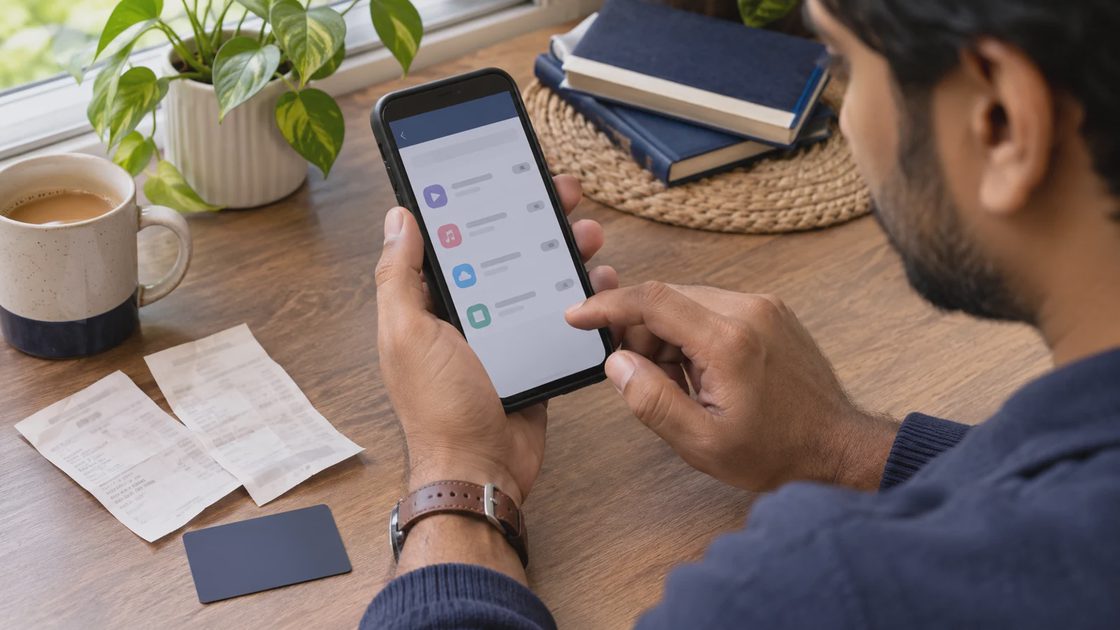
App-store lists are parts of the audit, not the entire audit. Reconcile them with the payment trail so the same subscription is not counted twice and a directly billed service is not missed.
Search email for the plans you forgot about
For how to find subscriptions you forgot about, search your relevant inboxes for renewal, subscription, trial, receipt, membership, and the merchant names found on statements. Include an older purchase address if you still use it for accounts.
Look for annual renewals and introductory offers approaching their normal price. Record the next charge shown in the account rather than assuming the original promotional amount still applies.
A cancellation email also deserves a quick check. Does it confirm cancellation, acknowledge a request, or explain another required step? Keep the confirmation and effective date with the audit record.
I distinguish active subscriptions from ordinary repeat purchases. Buying printer ink twice does not establish a subscription. A recurring membership or service should have a billing arrangement you can identify.
If the search turns up a suspicious charge notice, open the known service directly. Do not enter payment details through a renewal message simply because its wording matches your search.
Build a recurring payment tracker you can maintain
A subscription tracker spreadsheet needs enough detail to support the next decision. It does not need passwords, full card numbers, or every email receipt pasted into one file.
Field | What I record | Why it matters |
|---|---|---|
Service and plan | Recognizable name, account email | Distinguishes similar household purchases |
Billing route | Apple, Play, direct website, other provider | Identifies where changes must happen |
Cost and interval | Amount, currency, monthly or annual | Makes comparisons meaningful |
Next renewal | Date and any known price change | Sets the decision deadline |
Owner and users | Who controls it and who relies on it | Prevents a surprise loss of access |
Decision and evidence | Keep, review, cancel; confirmation location | Keeps the action and result separate |
For a hypothetical example, a $7 monthly plan costs $84 over twelve months before tax. A $60 annual plan has a lower annual price, but it is not better value if nobody needs the service. Use your own actual amounts and distinguish current spending from potential future savings.
If a service is already prepaid, canceling renewal may prevent a later charge without refunding the current period. Record those as different outcomes. A tracker should not call every prevented renewal money already returned.
Make the keep-or-cancel decision with the household
For how to manage family subscriptions, ask who uses each plan and what would stop working if it ended. Shared storage, a password manager, a school-related service, and a streaming subscription have different dependencies.
I review overlap by job. Two music services may duplicate a household need, while two cloud accounts may protect different records. Similar names do not prove that one can disappear safely.
Choose a small set of decisions:
Keep: a clear current job and understood cost.
Downgrade or change: useful service, unnecessary tier or duplicate seats.
Cancel renewal: no current need, with access consequences checked.
Investigate: unfamiliar charge, uncertain owner, or unclear account.

If the owner cannot be identified, assign a specific investigation rather than leaving a blank row. Find the receipt, match the account, and confirm the provider before treating the charge as understood.
Protect the records before changing a plan
Before canceling storage or a work tool, check what happens to files, sharing, and exports. Save important records in a supported format and open the saved copy. A downloaded archive that you have not inspected is not yet a verified migration.
For a subscription used by several people, tell the affected users what changes and when. “Canceled” can mean renewal is off while access continues until the paid period ends. Record that date so nobody discovers the change during an urgent task.
Save the cancellation confirmation and check a later statement for the expected result. If a charge continues, use the billing route and confirmation to contact the provider or payment service through its normal support process.
Changing the payment card alone is not a reliable substitute for canceling the agreement. Manage the subscription itself and retain evidence of the requested change.
Distinguish a trial from a duplicate charge
A trial can be active without appearing on a statement yet. Add it from the service account or confirmation email, including the future price and decision date. That prevents a money-only review from overlooking the next charge already scheduled.
A suspected duplicate needs investigation before cancellation. Two entries with similar names might belong to different family accounts, or one might be a temporary authorization rather than a settled subscription payment. Check the transaction status and account receipts. I keep the row marked unresolved until the billing route explains the charge; a tidy spreadsheet should not disguise an unanswered question.
Keep currencies and billing intervals explicit when calculating totals. A monthly equivalent is a comparison aid, not the date or amount of the next actual charge.
Make the next holiday offer pass one question
Before accepting a trial, name the job it will do and the existing service it might replace. Record the trial end, renewal price, billing account, and where to cancel. Set a reminder early enough to make a decision, not merely notice that a charge happened.
If the offer duplicates something on the keep list, test the replacement before canceling the existing service. Check access, required features, exports, and who in the household must change their routine.
A subscription audit works when charges have recognizable owners and decisions have evidence. Start with one statement and reconcile one service across its payment, account, and receipt. Once that row is complete, the rest of the list becomes a series of understandable decisions instead of a collection of uneasy guesses.



No comments yet — be the first to share a thought.